 Eat'n'Fit
TL;DR
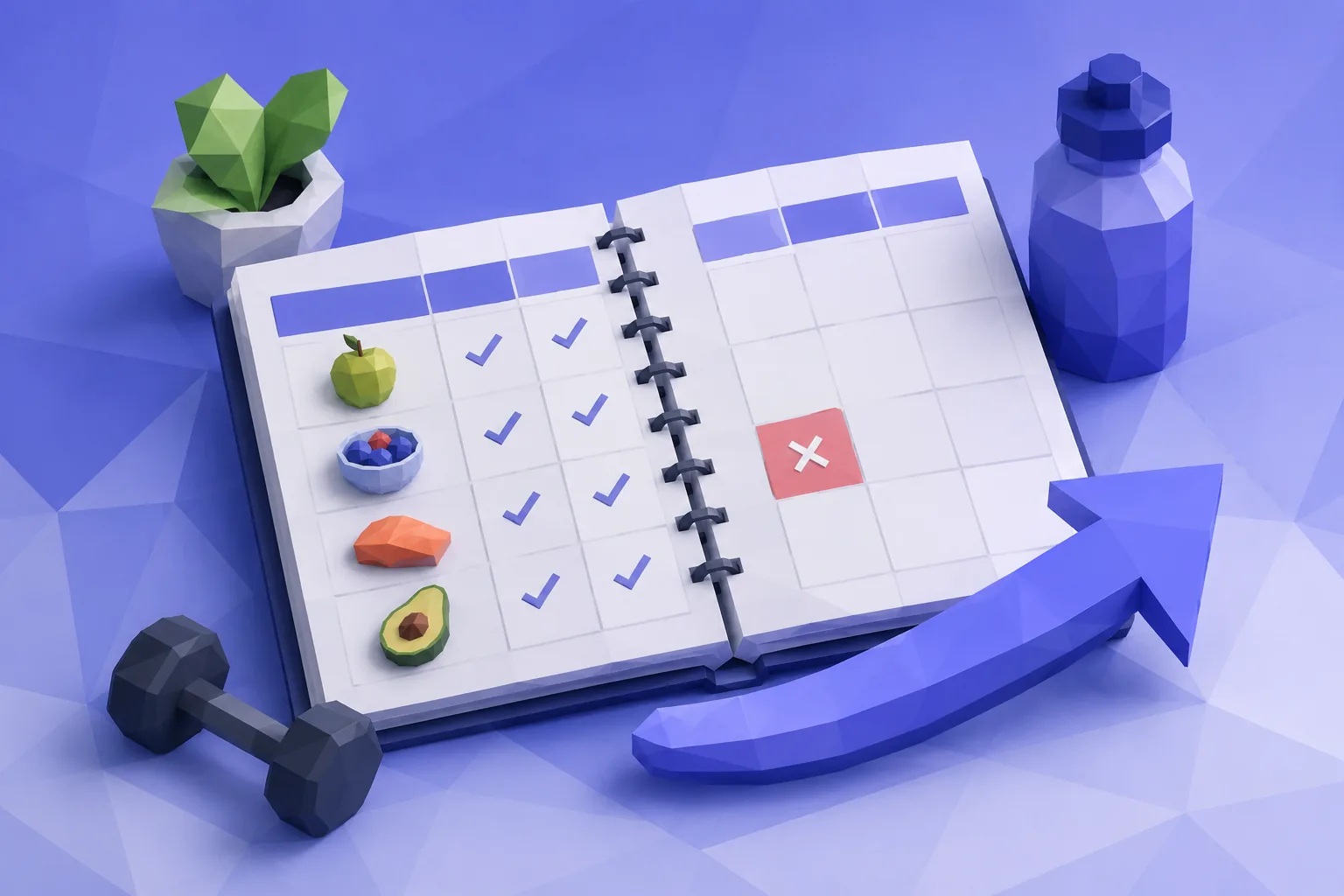
- A missed day or a blown meal is normal. It is information about a hard day, not proof you have failed.
- The real damage comes from the response, not the slip — "I've ruined it, why bother" is what actually ends diets.
- Missing one day does not undo a forming habit, and one big meal is a rounding error across a week.
- Just log the next meal. Resuming beats restarting; you never have to "begin again" from zero.
Every person who has ever tracked their food has had the day where it falls apart. You forget to log lunch, or a birthday cake happens, or you simply cannot face opening the app. What happens next matters far more than the slip itself — and it is where most attempts are quietly lost.
The slip is not the problem
A single off-day barely registers against weeks of consistency. The thing that does real harm is the mindset that follows it. All-or-nothing thinking — deciding that one lapse has "ruined" everything, so you may as well abandon the whole plan — is a documented driver of relapse. Studies of weight regain point to the inability to keep going after setbacks, rather than the setbacks themselves, as what separates people who maintain from those who don't. The cake did not end your diet; the story you told yourself about the cake did.
Rigid rules break; flexible ones bend
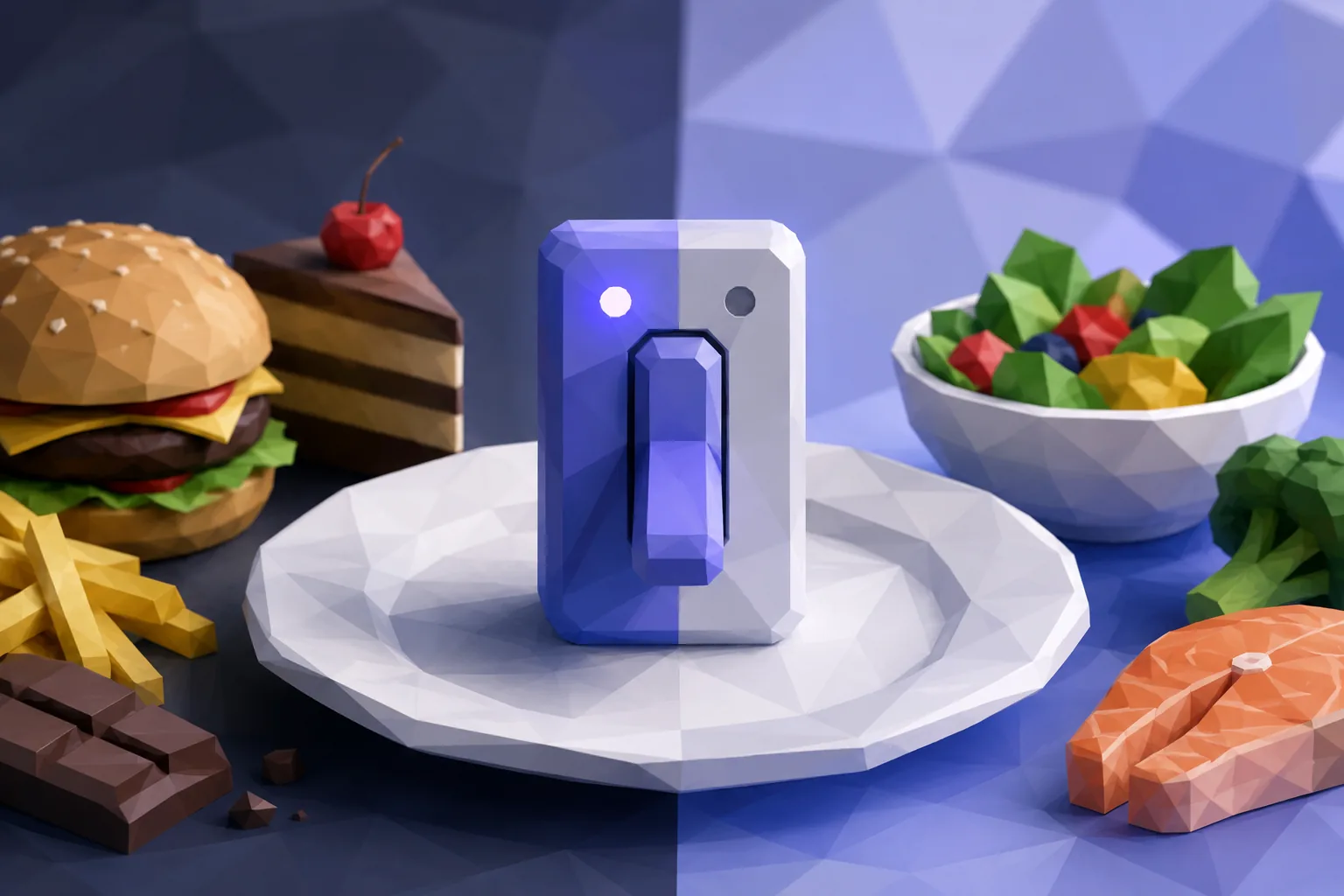
This is why how you hold your plan matters as much as the plan. Research distinguishes rigid dietary control — an absolute, all-or-nothing style — from flexible control, which allows for indulgences and imperfect days. The flexible style is linked to lower body weight and less disinhibited eating, while the rigid style tends to collapse the moment a rule is broken. A diet you can bend is a diet that survives real life.
The maths is on your side
It also helps to see the slip for the small thing it is. One big meal — even an 800-calorie overshoot — is a fraction of a week's energy, easily absorbed by the days around it. And a lapse does not reset your progress toward a habit: in habit-formation research, missing a single opportunity did not meaningfully derail the process. You are not back at square one. You are one ordinary day into a long project.
How to get back on track
- Log the very next meal. Do not wait for a clean Monday — the fastest recovery is simply the next entry.
- Log the slip too, if you can. An honest, rough estimate keeps your awareness intact; skipping it hides the day from your record and from you.
- Do not "make up for it" by starving. Overcorrecting with a punishing day just feeds the same all-or-nothing cycle.
- Zoom out to the trend. One high day on a trend line is a blip; against a single morning's weight it can look like a disaster it is not.
Consistency, remember, beats perfection: how often you log predicts success more than how flawless each entry is. A slightly messy diary you keep going with will always outperform a perfect one you quit.
A restart routine you can trust
Having a fixed, boring plan for slips removes the drama from them. When one happens, run the same three steps every time:
- Log the next meal. Not next Monday — the next thing you eat. The fastest way back is a single ordinary entry.
- Note what set it off, briefly. Was it hunger from under-eating earlier, a stressful day, no plan for dinner? The trigger is useful information for next time, not a stick to beat yourself with.
- Change nothing else. Do not punish the slip with a starvation day or an extra hour of cardio — that just feeds the cycle. Return to your normal target and carry on.
Because it is a routine rather than a judgement call, you never have to decide whether a slip "counts." You just run the steps and keep moving.
Self-kindness is a strategy, not a soft option
Beating yourself up feels like accountability, but it tends to do the opposite. Harsh self-criticism after a lapse fuels the low mood and "what's the point" thinking that lead to a bigger relapse, whereas treating yourself as you would a friend — "that was one meal, tomorrow is normal" — gets you back on track faster. This is the same lesson as flexible versus rigid control: the forgiving, flexible approach is the one associated with better long-term results. Kindness here is not indulgence; it is simply the response that keeps you in the game.
How Eat'n'Fit helps
Eat'n'Fit is designed to make resuming frictionless. There is no streak to shatter and no penalty for a gap — you just scan or say your next meal and you are logging again. Your weight shows as a trend line, so an off-day reads as the small bump it is rather than a verdict, and your daily target is always waiting, unchanged, for the next meal. The only move that matters after a slip is the next one, and the app makes it a few seconds away.
Sources
- Byrne SM, Cooper Z, Fairburn CG. Psychological predictors of weight regain in obesity. Behaviour Research and Therapy, 2004.
- Westenhoefer J, Stunkard AJ, Pudel V. Validation of the flexible and rigid control dimensions of dietary restraint. International Journal of Eating Disorders, 1999.
- Lally P, et al. How are habits formed: modelling habit formation in the real world. European Journal of Social Psychology, 2010.
- Harvey J, et al. Log often, lose more: electronic dietary self-monitoring for weight loss. Obesity, 2019.

No streak to break
Eat'n'Fit lets you resume in seconds — scan or say your next meal, and you are back on track with no penalty for the gap.


Everything on the Eat'n'Fit blog is published for general information and wellness only, and is not a substitute for medical or nutritional advice or treatment. Always talk to a doctor or a registered dietitian before making significant changes to your diet. If you have, or think you may be at risk of, an eating disorder, please do not rely on the app and seek professional help.