 Eat'n'Fit
TL;DR
- Two meals at 500 calories can feel completely different. A pastry and a full plate of chicken, potatoes, and veg are worlds apart on fullness.
- Protein is the anchor — it is the most satisfying macro and protects muscle while you are eating less.
- Fibre and volume do the rest — whole foods and water-rich vegetables fill the plate without filling the calorie budget.
- Build around those three levers and 500 calories stops feeling like a punishment.
Calories tell you the size of a meal, not how long it will hold you. That is why a 500-calorie muffin can leave you hunting for a snack an hour later while a 500-calorie plate of real food keeps you going until dinner. The trick to the second kind is not willpower — it is what you put on the plate.
Why some 500-calorie meals leave you starving
Energy-dense, low-volume foods — pastries, chips, sugary drinks — pack a lot of calories into a small, quickly eaten package that does little to signal fullness. A filling meal does the opposite: it brings protein, fibre, and sheer physical volume, all of which tell your body it has been fed. Same calories, completely different afterlife.
The three levers of a filling plate
- Protein first. It is the most satiating macro, and a protein-forward meal keeps hunger quiet for longer. It also protects the muscle you already have while you are in a calorie deficit. Chicken, fish, eggs, Greek yogurt, tofu, and beans all pull their weight.
- Fibre for staying power. Higher-fibre carbs digest slowly and keep you fuller, and whole grains and other high-fibre foods are tied to better long-term health as a bonus. Think oats, whole grains, lentils, fruit, and vegetables.
- Volume for the eyes and stomach. Water-rich vegetables and broths add bulk and chewing time for very few calories — foods with a lower calorie density let you eat a bigger, more filling portion for the same calories — so the plate looks and feels like a proper meal.
What a filling 500 looks like
A few plates that land near 500 calories and actually hold you:
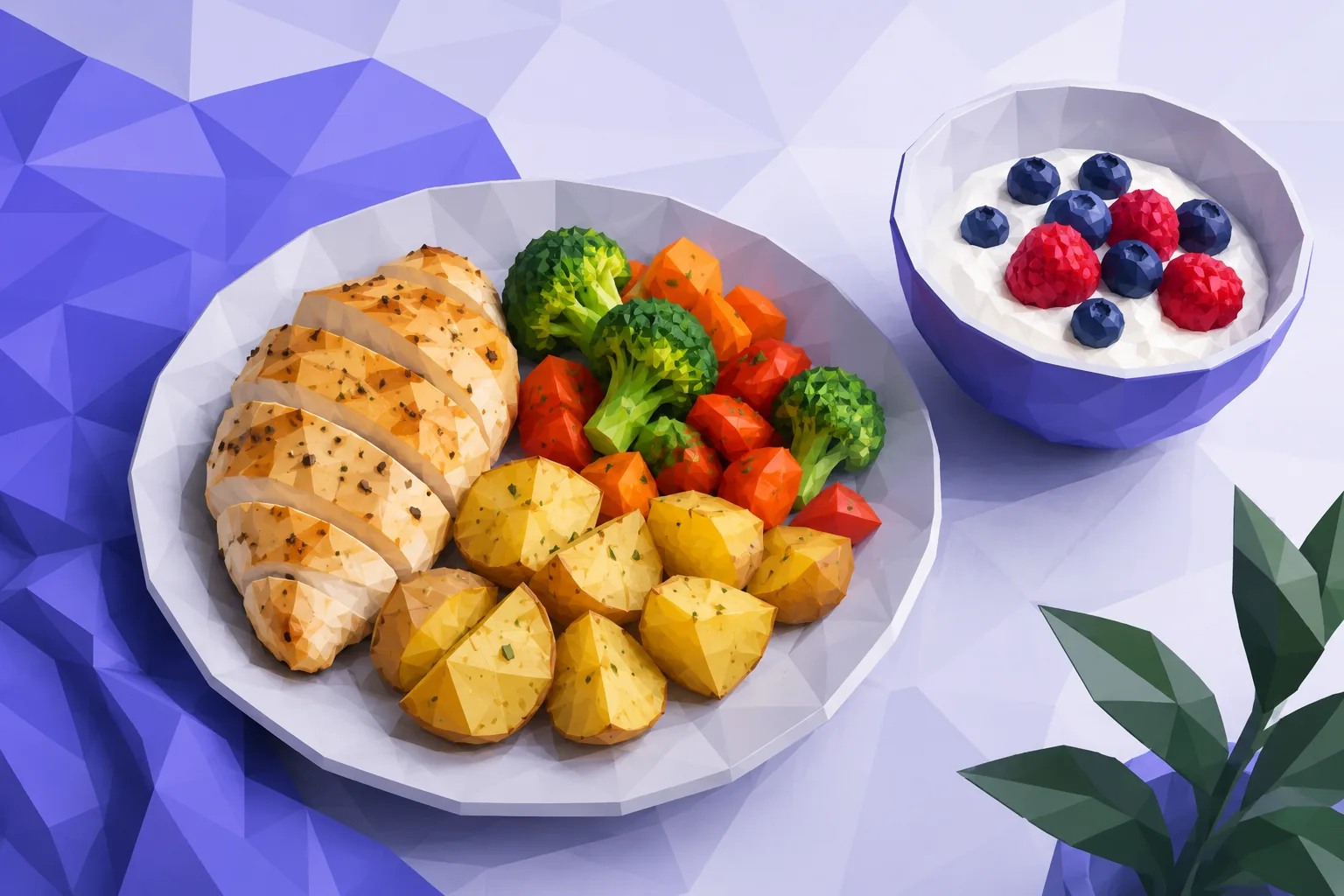
- Grilled chicken breast, a fist of potatoes, and a big pile of roasted vegetables. High protein, real volume, plenty of fibre.
- Greek yogurt with oats, berries, and a spoon of nuts. Protein and fibre in a bowl that eats slowly.
- A hearty lentil or bean soup with a slice of wholegrain bread. Fibre and volume for very little calorie cost.
- Two eggs, black beans, and sautéed vegetables with a small tortilla. Protein-led and genuinely filling.
Notice the pattern: a clear protein, a fibre-rich carb, and a load of vegetables. That template scales up or down to whatever budget you have.
Four meals that prove the point
The theory is easier to trust with examples. Each of these lands around 500 calories and actually fills you up:
- Chicken burrito bowl: grilled chicken, a scoop of rice, black beans, salsa, and a mountain of lettuce and peppers.
- Salmon and veg tray-bake: a fillet of salmon with roasted courgette, peppers, and a small potato.
- Big egg breakfast: three eggs, two slices of wholegrain toast, and a pile of spinach and mushrooms.
- Tofu noodle stir-fry: tofu, a modest portion of noodles, and a wok's worth of mixed vegetables in a light sauce.
Notice the shape of each: a solid protein, a huge volume of vegetables, and a measured — not banished — portion of carbs and fat.
Build your own 500-calorie meal
Once you see the pattern you do not need recipes, just a formula: start with a palm of protein, pile on high-volume vegetables, add one measured carb and one measured fat. The protein and fibre do the heavy lifting on fullness, the vegetables add the volume that satisfies your eyes and stomach for almost no calories, and keeping the carb and fat portions defined (a fist of rice, a thumb of oil) stops the total creeping. Swap the specific foods however you like — the structure is what keeps it both filling and on-budget.
How Eat'n'Fit handles it
Scan or log a meal and Eat'n'Fit shows not just the calories but the protein and the rest of the split, so you can see at a glance whether a 500-calorie plate is built to fill you or built to disappoint. Because meals stay editable before you log them, it is easy to swap a low-fibre side for a better one and watch the numbers — and your likely fullness — improve.
Sources
- Phillips SM. A brief review of higher dietary protein diets in weight loss: a focus on athletes. Sports Medicine, 2014.
- McRae MP. Health benefits of dietary whole grains: an umbrella review of meta-analyses. Journal of Chiropractic Medicine, 2016.
- Rolls BJ. The relationship between dietary energy density and energy intake. Physiology & Behavior, 2009.

Build a plate that holds you
Scan a meal in Eat'n'Fit to see its protein and split, then tweak it before you log — so 500 calories works harder for you.


Everything on the Eat'n'Fit blog is published for general information and wellness only, and is not a substitute for medical or nutritional advice or treatment. Always talk to a doctor or a registered dietitian before making significant changes to your diet. If you have, or think you may be at risk of, an eating disorder, please do not rely on the app and seek professional help.