 Eat'n'Fit
TL;DR
- Week one has one job: make logging a habit. An accurate diary matters less than one you actually keep.
- Start small. Log a single meal on day one, work up to a full day by mid-week, and let the routine build from there.
- Log often beats log perfectly. How frequently you record is a better predictor of results than how flawless each entry is.
- Judge the week, not the day. Weigh in a couple of times and read the trend at the end — one heavy morning tells you nothing.
The first week of tracking is where most people either click with it or quietly give up. The mistake is treating day one like an exam — logging every crumb, chasing a perfect number, and burning out by Thursday. A better goal for week one is much smaller and far more useful: turn logging into something you do without thinking. Here is a gentle, day-by-day way to get there.
What week one is really for
You are not trying to nail your calories this week. You are building a habit, and habits take repetition to set. In one well-known study, it took people a median of about two months of daily repetition before a new behaviour felt automatic. So treat this week as the opening of that process, not the finish line. The single most valuable thing you can do is open the app every day, even briefly.
The same research offers a quiet reassurance: missing one day did not derail the habit. That takes the pressure off. A skipped lunch entry is not failure — it is a normal part of learning the routine.
A day-by-day plan
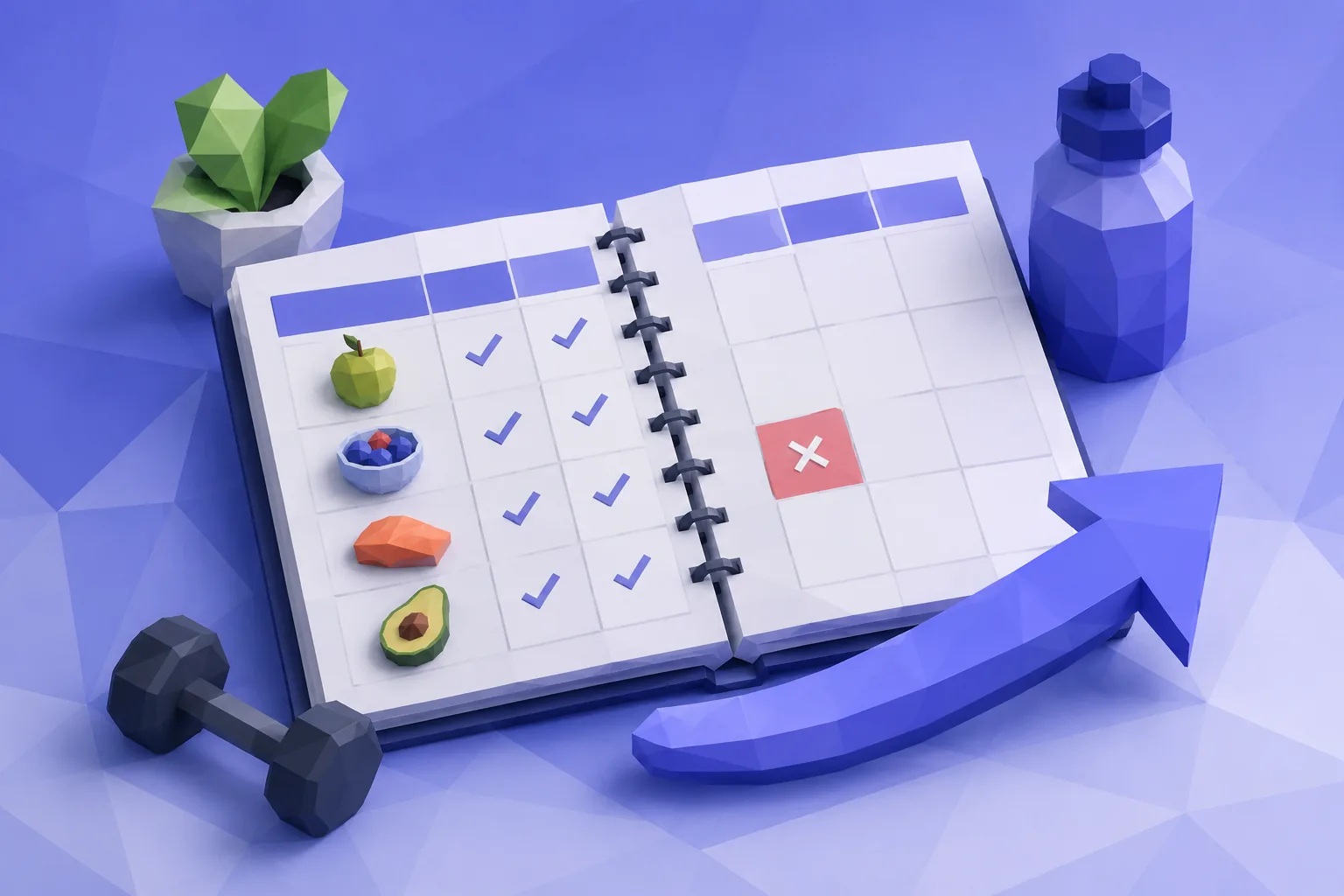
- Days 1–2: log one meal. Pick the easiest meal of your day and scan it. Point the camera at your plate, let Eat'n'Fit read the food, and log it. That is the whole task. You are learning the motion, not tracking a full day.
- Days 3–4: log a whole day. Now capture everything you eat from morning to night. When the scan guesses a portion, nudge it before you log — the meal stays editable, so a quick tap gets you closer to the truth.
- Day 5: catch the sneaky stuff. Drinks, snacks, the oil you cooked in, the handful of nuts. These are the entries people skip, and they add up. If a food is faster to say than to photograph, use voice logging and just tell the app what you had.
- Days 6–7: read your first week. Look back at your daily totals and notice the pattern, not the perfection. This is also the moment to check your weight trend rather than any single reading.
Log often, not perfectly
If you take one principle from this week, make it this one. When researchers looked at what actually separated successful trackers from the rest, how often people logged predicted their results better than how complete each entry was. A quick, rough log every day beats a flawless one you abandon by the weekend.
That is freeing, because it means you can log a restaurant meal you can only estimate, save it, and move on. The habit of opening the app is doing more for you than any single accurate entry.
Read the week, not the day
By day six or seven you will want to know if it is "working." Resist judging that by the scale on any one morning, which swings with water, salt, and sleep. Weighing in regularly and watching the trend is what reflects real change, and Eat'n'Fit charts your weight as a trend line so the daily noise fades into the background.
So end your first week by zooming out. You are not looking for a dramatic result after seven days — you are checking that the habit is forming and the direction looks right. If you logged most days and can read your own trend, week one did its job. Everything useful about tracking is built on top of that.
When you don't know the exact food
The single biggest thing that stops beginners is a meal they cannot log precisely — a home-cooked stew, a restaurant plate, a family recipe. The rule for week one is simple: estimate and move on. A close guess that gets logged beats a perfect number you never enter. Picture the components — a palm of protein, a fist of carbs, a thumb of fat — and record your best estimate. Within a few days you will get noticeably better at eyeballing portions, and that skill is worth more than any single precise entry. For anything you eat often, log it carefully once; after that it is a quick repeat.
Make the habit easier to keep
A new behaviour sticks faster when you remove friction and attach it to something you already do. A few tricks that help in the first week:
- Log before you eat, not after. Snapping the plate first means you never finish the meal and forget it happened.
- Tie it to an existing cue. "I log when I sit down to eat" is easier to keep than a vague intention to track.
- Keep the app one tap away. Put it on your home screen so opening it is never the obstacle.
- Forgive the gaps. Missing a meal or a day does not undo anything — just log the next one and keep the streak of showing up alive.
How Eat'n'Fit helps
Everything about the first week is easier when logging takes seconds rather than minutes. Point the camera at your plate and Eat'n'Fit reads the meal into calories and macros; when a photo is awkward, say what you ate instead. Your foods stay editable before you log, so a quick estimate is easy to nudge closer, and frequently-eaten meals are a tap to repeat. By day seven your weight trend line and daily totals are already there waiting — but the real win is simpler: opening the app has started to feel like second nature.
Sources
- Lally P, et al. How are habits formed: modelling habit formation in the real world. European Journal of Social Psychology, 2010.
- Harvey J, et al. Log often, lose more: electronic dietary self-monitoring for weight loss. Obesity, 2019.
- Zheng Y, et al. Self-weighing in weight management: a systematic literature review. Obesity, 2015.

Start your first week
Scan your next meal with Eat'n'Fit and let the habit build from there — a photo, a tap, and your day starts logging itself.


Everything on the Eat'n'Fit blog is published for general information and wellness only, and is not a substitute for medical or nutritional advice or treatment. Always talk to a doctor or a registered dietitian before making significant changes to your diet. If you have, or think you may be at risk of, an eating disorder, please do not rely on the app and seek professional help.