 Eat'n'Fit
TL;DR
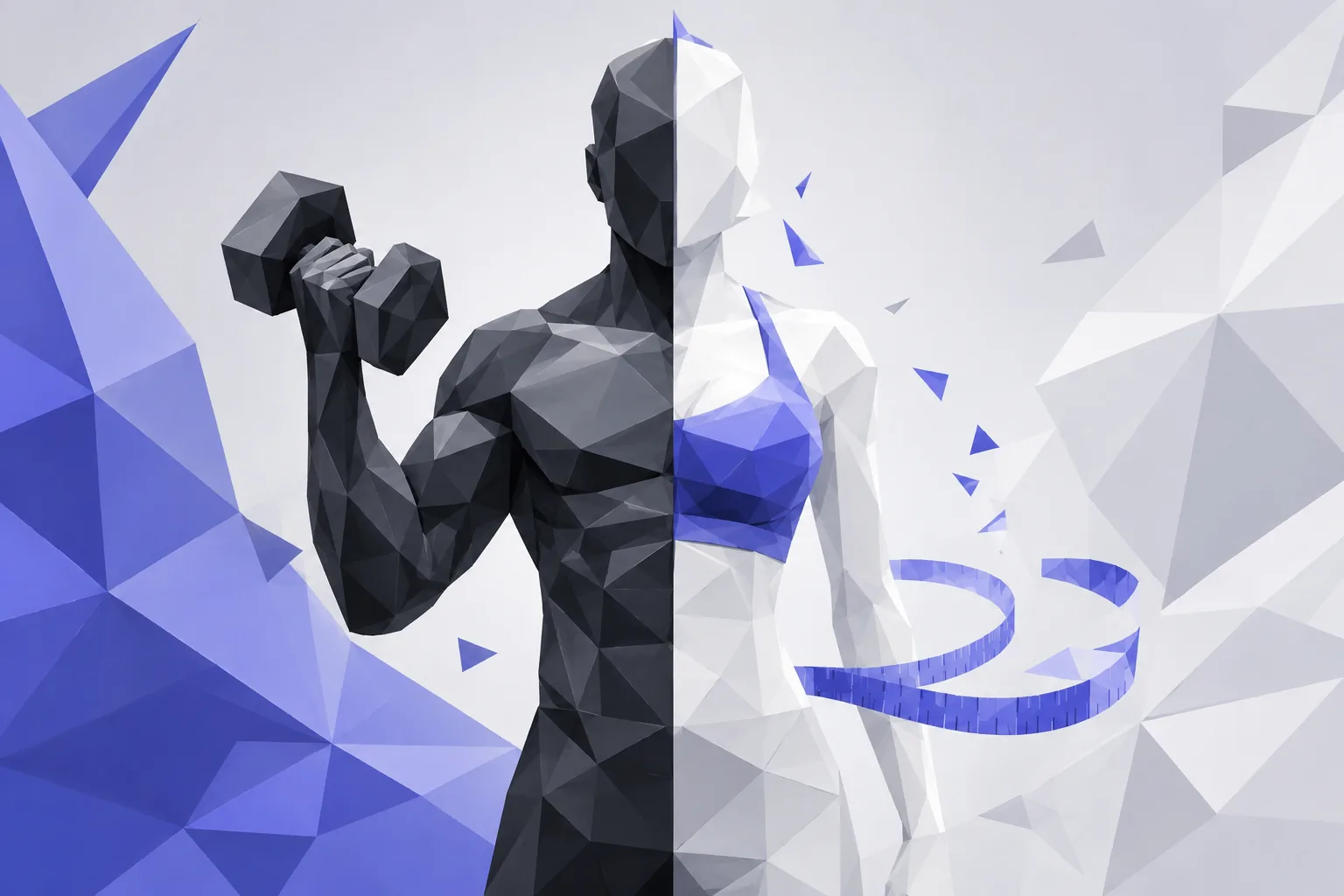
- Body recomposition is real — you can lose fat and build muscle at once, especially if you are new to training or carrying extra fat.
- It rests on three pillars: plenty of protein, genuine resistance training, and only a modest calorie deficit.
- It is slow. The scale may barely move while your shape changes, so measure by more than weight.
- Protein and lifting are non-negotiable — they are what tell your body to keep muscle and spend fat.
"You can't build muscle and lose fat at the same time" is common gym wisdom, and it is only half true. For many people — beginners, those returning after a break, and anyone carrying extra body fat — doing both at once is very achievable. It just asks for the right conditions and some patience.
Why it works
Under the right stimulus, your body can pull energy from fat stores while directing protein toward building muscle. In one tightly controlled trial, young men in a steep calorie deficit who trained hard and ate plenty of protein gained lean mass and lost fat at the same time. The deficit supplies the fat loss; the training and protein supply the muscle.
The three pillars
- Enough protein. This is what protects and builds muscle while you are eating less. A protein-forward diet preserves lean mass during a deficit where a low-protein one lets it slip away alongside the fat.
- Real resistance training. Lifting is the signal that tells your body the muscle is worth keeping and growing. It also nudges up your resting metabolism, unlike cardio alone. Progressive, challenging sets matter far more than the exact exercises.
- A modest deficit. Go too aggressive and there is not enough energy to build anything; muscle growth stalls and can reverse. A gentle deficit — or even maintenance for leaner people — leaves room for both jobs.
Set your expectations
Recomposition is slower than a straight cut or a straight bulk, because your body is doing two things at once. Weeks can pass with almost no change on the scale while your waist shrinks and your lifts climb. That is success, not failure — which is why weight alone is a poor scoreboard here. Track strength, how clothes fit, and progress photos alongside the number, and give it months rather than weeks.
Who can expect the most
Recomposition works for almost everyone, but not at the same speed. You are in the fastest-progress group if you are:
- New to resistance training, where "beginner gains" let muscle build quickly even in a deficit.
- Returning after a break, as muscle you once had comes back faster than it was first built.
- Carrying extra body fat, which gives your body plenty of stored energy to fuel muscle growth while fat falls.
If you are already lean and well-trained, simultaneous gains slow to a crawl — at that point most people do better cycling dedicated cutting and building phases instead. The more advanced you are, the more patience recomposition demands.
How to measure it (not just the scale)
Because fat is leaving while muscle arrives, the scale is the worst single tool for judging a recomp — it can barely move for weeks while your body visibly changes. Track a wider set of signals instead:
- Tape measurements — waist, hips, arms, thighs — often shift when weight does not.
- Progress photos every few weeks in the same light and pose.
- Strength in the gym, a reliable proxy for muscle being built.
- How clothes fit, the everyday feedback that matters most to people.
Sleep and recovery quietly underpin all of it: muscle is built and appetite is regulated during rest, so protecting your sleep is part of the training, not separate from it.
How Eat'n'Fit helps
Eat'n'Fit sets a calorie target from your own stats and shows your protein alongside it, so you can hold a modest deficit while consistently hitting the protein that makes recomposition possible. Log your training so the work counts toward your day, and watch your weight as a trend rather than a verdict — because on a recomp, the trend and the mirror tell the real story long before the scale does.
Sources
- Longland TM, et al. Higher compared with lower dietary protein during an energy deficit combined with intense exercise promotes greater lean mass gain and fat mass loss: a randomized trial. American Journal of Clinical Nutrition, 2016.
- Phillips SM. A brief review of higher dietary protein diets in weight loss: a focus on athletes. Sports Medicine, 2014.
- MacKenzie-Shalders K, et al. The effect of exercise interventions on resting metabolic rate: a systematic review and meta-analysis. Journal of Sports Sciences, 2020.

Hold the deficit, hit the protein
Eat'n'Fit tracks your calories and protein together and logs your training, so recomposition has the conditions it needs.


Everything on the Eat'n'Fit blog is published for general information and wellness only, and is not a substitute for medical or nutritional advice or treatment. Always talk to a doctor or a registered dietitian before making significant changes to your diet. If you have, or think you may be at risk of, an eating disorder, please do not rely on the app and seek professional help.