 Eat'n'Fit
TL;DR
- Aim for roughly 1.6 grams of protein per kilo of body weight a day — that is where muscle gains from training are largely maxed out.
- More can help in a deficit. When calories are low, pushing higher — up to about 2 g/kg — helps protect muscle.
- Beyond that, returns flatten. Very high intakes do not build extra muscle; they mostly cost money and appetite.
- Spread it across the day rather than loading it all into dinner.
On a recomposition — losing fat while building muscle — protein is the macro you cannot get wrong. It is the raw material for muscle and the signal that tells your body to keep it. The question is simply how much, and here the research is unusually clear.
The number that matters
Pooling dozens of training studies, researchers found that muscle and strength gains keep rising with protein intake only up to a point: around 1.6 grams per kilogram of body weight a day is where the benefit largely plateaus. Below that you may be leaving gains on the table; well above it, extra protein does little for your muscles. For a 70 kg person that is roughly 112 grams a day.
Push a little higher in a deficit
Cutting calories changes the calculation slightly. When you are eating less, more protein helps shield the muscle you have from being burned for fuel. In a study of trained young men in a steep deficit, a high-protein intake of about 2.4 g/kg supported lean-mass gain and fat loss at once. You do not need to hit that exact figure, but nudging toward roughly 2 g/kg while dieting is a sensible insurance policy for your muscle.
Where more stops helping
It is worth saying plainly: past these ranges, piling on more protein does not build more muscle. It is a satisfying macro and excellent at preserving lean mass in a diet, but there is a ceiling on how much your body can put to work. Extra grams beyond it mostly crowd out other foods and your wallet.
Spread it out
Muscle-building responds better to protein arriving in several doses than in one giant serving. Aim to include a solid source — meat, fish, eggs, dairy, beans, tofu — at most meals rather than saving it all for dinner. Practically, three or four meals each carrying 25 to 40 grams gets most people to target without much fuss.
How to hit it without living on chicken
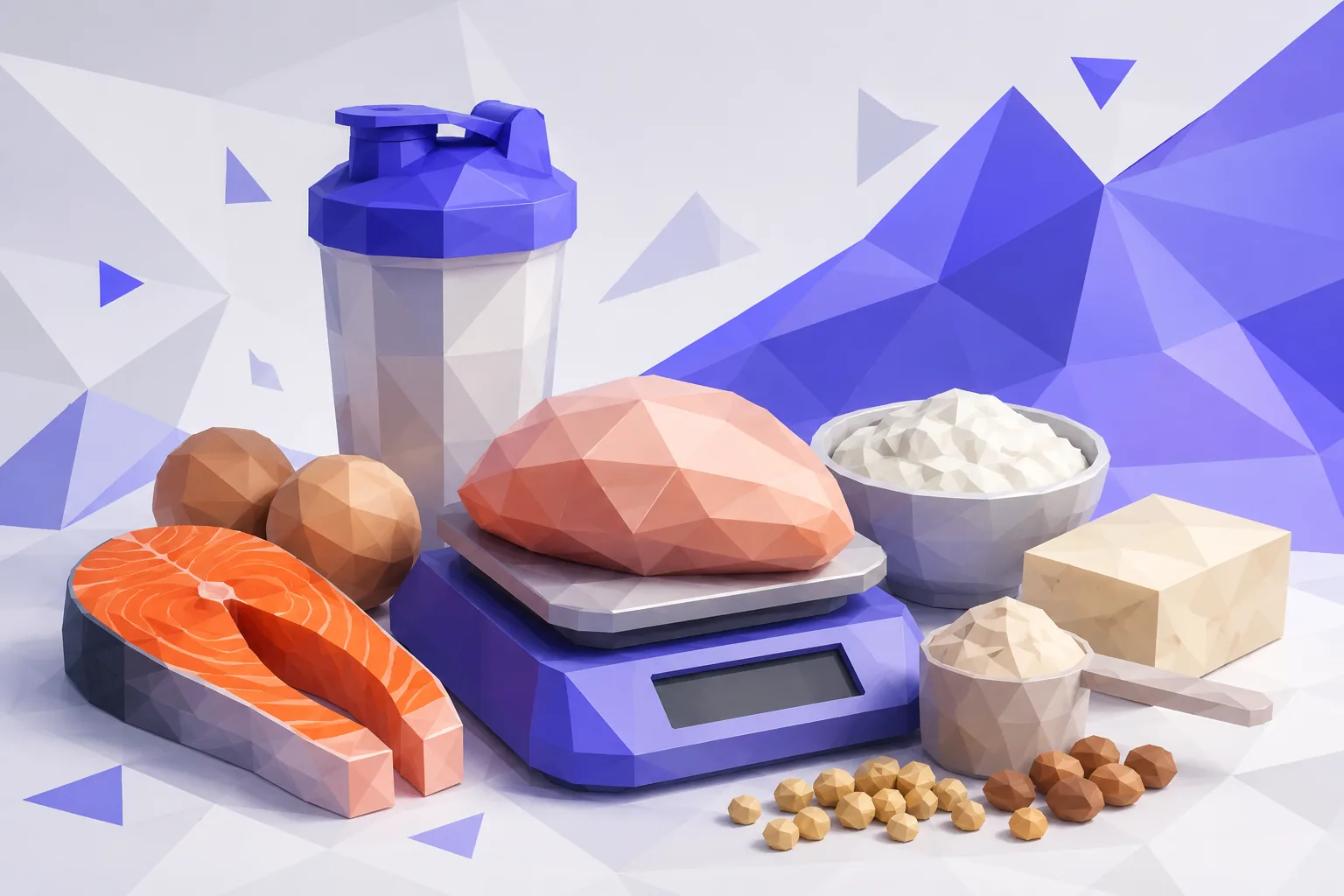
The target sounds harder than it is once you know the heavy hitters. Rough protein per common serving:
- Chicken breast (150 g): ~45 g · Greek yogurt (200 g): ~20 g
- Eggs (2): ~12 g · Cottage cheese (100 g): ~11 g
- Tofu/tempeh (150 g): ~18 g · Lentils (cooked, 200 g): ~18 g
- Whey or plant protein scoop: ~25 g
Vary the sources so meals stay interesting, and lean on high-protein staples — yogurt, cottage cheese, edamame, tinned fish — for quick tops-ups when the day is running short.
Timing across the day
Total protein matters most, but distribution helps. Muscle responds better to protein arriving in several moderate doses than in one huge serving, so aim for roughly 25 to 40 grams at each of three or four meals rather than a token breakfast and a giant dinner. There is no narrow "anabolic window" to panic about after training — getting enough protein across the whole day is what counts, and a meal within a few hours of a workout comfortably covers it.
Do you need protein powder?
No — powder is a convenience, not a requirement. Whole foods cover the target for most people. But a scoop of whey or plant protein is a cheap, fast way to close a 20-to-30-gram gap on a busy day, and it counts exactly the same toward your total as food does. Treat it as a tool for the days real meals fall short, not as the foundation of your intake.
How Eat'n'Fit helps
Eat'n'Fit turns your calorie goal into a protein target and tracks it as you log, so you can see in real time whether you are on pace and where the gaps are. Scan or say what you ate, watch the protein number climb through the day, and top it up before bed if you are short — the tracking is what turns "eat more protein" into an actual, hit-most-days habit.
Sources
- Morton RW, et al. A systematic review, meta-analysis and meta-regression of the effect of protein supplementation on resistance training-induced gains in muscle mass and strength. British Journal of Sports Medicine, 2018.
- Longland TM, et al. Higher compared with lower dietary protein during an energy deficit combined with intense exercise promotes greater lean mass gain and fat mass loss. American Journal of Clinical Nutrition, 2016.
- Phillips SM. A brief review of higher dietary protein diets in weight loss: a focus on athletes. Sports Medicine, 2014.

Hit your protein, every day
Eat'n'Fit turns your goal into a protein target and tracks it as you log, so "eat more protein" becomes a number you actually reach.


Everything on the Eat'n'Fit blog is published for general information and wellness only, and is not a substitute for medical or nutritional advice or treatment. Always talk to a doctor or a registered dietitian before making significant changes to your diet. If you have, or think you may be at risk of, an eating disorder, please do not rely on the app and seek professional help.