 Eat'n'Fit
TL;DR
- Eating more when stressed or tired is biology, not weakness. Both change your appetite through real physiological routes.
- Short sleep pushes intake up — studies show people eat several hundred extra calories a day when sleep-deprived.
- Stress steers you toward high-calorie "comfort" foods through the body's cortisol and reward systems.
- Protect sleep and manage stress as part of your plan, and keep logging through the hard weeks instead of going dark.
You can be doing everything right and still find your appetite betraying you during a stressful week or after a run of bad nights. It is easy to read that as a failure of willpower. It is closer to the truth to read it as your physiology changing the rules. Stress and sleep loss both nudge you to eat more, and understanding how takes the shame out of it — and points to what actually helps.
Sleep loss turns up your intake
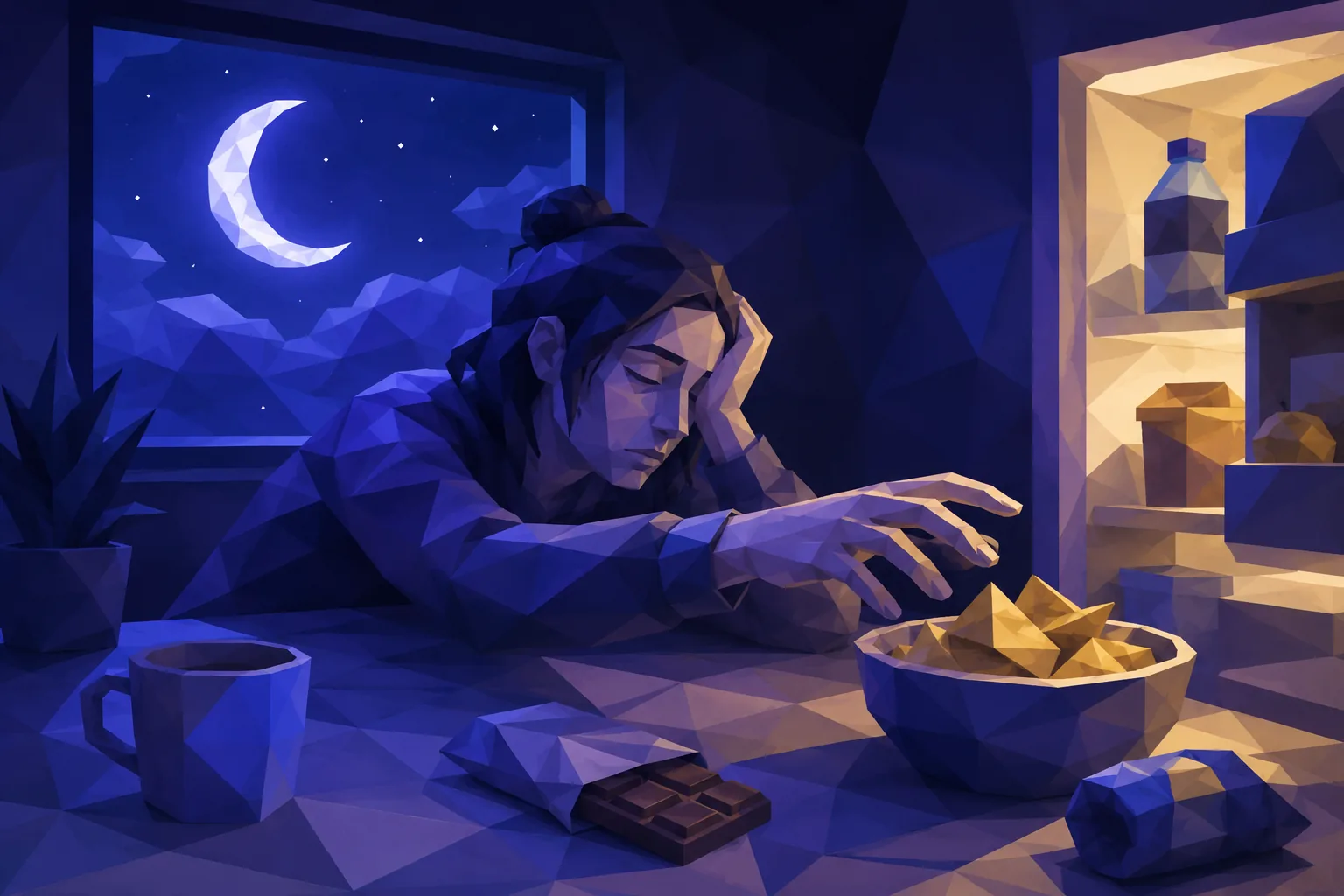
Sleep is one of the most underrated levers in appetite. In controlled studies where people had their sleep cut short, they ate substantially more the next day: one trial found participants consumed an extra roughly 550 calories a day when sleep was restricted, with no matching rise in how much they burned. Short sleep tends to skew choices toward energy-dense, sugary, and fatty foods too — so the extra calories arrive from exactly the foods you were trying to limit. A tired brain is a hungrier, less disciplined one, and no amount of willpower fully overrides that.
Stress steers you to comfort food
Stress works through a different but equally physical pathway. When stress is ongoing, the hormone cortisol stays elevated, and cortisol interacts with the brain's reward circuitry to make high-sugar, high-fat "comfort" foods more appealing and more rewarding. The pull toward ice cream over broccoli on a terrible day is not a character flaw; it is your stress response reaching for the fastest available relief. Recognising that is the first step to responding to it deliberately rather than automatically.
Why this matters for tracking
These hard weeks are exactly when most people stop logging — and that is the worst moment to lose visibility, because intake is already drifting up. Keeping the diary going is what preserves awareness when your biology is working against you, and consistent logging predicts better outcomes than perfect logging. Even a rough entry on a stressed, sleepless day keeps you honest and keeps the habit alive.
What actually helps
- Treat sleep as part of your diet. Protecting seven-plus hours does more for appetite control than most food rules.
- Have a stress plan that isn't food. A walk, a call, a few minutes of quiet — a substitute for the comfort-food reflex, decided in advance.
- Keep easy, satisfying options on hand, so the fast choice on a hard day is a reasonable one.
- Do not panic at the scale. A stressful week can bump your weight through water and higher intake; read the trend and let it settle rather than overreacting.
Telling emotional hunger from physical
Stress-driven eating is often emotional hunger wearing hunger's clothes, and learning to tell them apart defuses a lot of it. A few reliable tells:
- Speed of onset. Physical hunger builds gradually; emotional hunger hits suddenly and urgently.
- What will satisfy it. Physical hunger is open to most foods; emotional hunger demands a specific comfort food and little else.
- Where you feel it. Physical hunger sits in the stomach; emotional hunger sits in the head, as a craving or a mood.
- How it ends. Physical hunger stops at fullness; emotional eating often continues past it and trails guilt.
When it reads as emotional, a short pause — a glass of water, a ten-minute walk, a text to a friend — often lets the urge crest and pass without a decision you would regret.
A wind-down that protects both
Because sleep and stress are upstream of appetite, tending them pays off more than any food rule. A simple evening routine helps on both fronts: a consistent bedtime, screens dimmed and set aside before sleep, caffeine kept to the morning, and a few minutes of something calming — reading, stretching, slow breathing. Better sleep quiets the next day's hunger, and a genuine wind-down lowers the stress that steers you toward the biscuit tin. It is not indulgent self-care; it is appetite management happening the night before.
How Eat'n'Fit helps
Eat'n'Fit is built to survive the weeks when life is loud. Logging by scan or voice takes seconds, so it stays doable when you are exhausted, and your weight shows as a trend rather than a jumpy daily number — so a stressed, salty, poorly-slept week reads as a temporary bump, not a disaster. When your body turns up the appetite, the app keeps the picture clear enough for you to steer.
Sources
- Calvin AD, et al. Effects of experimental sleep restriction on caloric intake and activity energy expenditure. Chest, 2013.
- Adam TC, Epel ES. Stress, eating and the reward system. Physiology & Behavior, 2007.
- Harvey J, et al. Log often, lose more: electronic dietary self-monitoring for weight loss. Obesity, 2019.
- Zheng Y, et al. Self-weighing in weight management: a systematic literature review. Obesity, 2015.

Keep steering through hard weeks
Eat'n'Fit makes logging quick enough for an exhausted day and shows the trend, so a stressful week stays a bump, not a spiral.


Everything on the Eat'n'Fit blog is published for general information and wellness only, and is not a substitute for medical or nutritional advice or treatment. Always talk to a doctor or a registered dietitian before making significant changes to your diet. If you have, or think you may be at risk of, an eating disorder, please do not rely on the app and seek professional help.