 Eat'n'Fit

TL;DR
- Two loose weekend days can cancel five tight weekdays. Most people eat and drink more, and log less, on Saturdays and Sundays.
- Research finds people gain weight on weekends and lose it back during the week — the classic saw-tooth pattern.
- The damage is mostly untracked calories: alcohol, restaurant portions, and the meals that never made it into the diary.
- You do not have to be strict — just aware. Keep logging on weekends and judge yourself on the weekly average, not the perfect weekday.
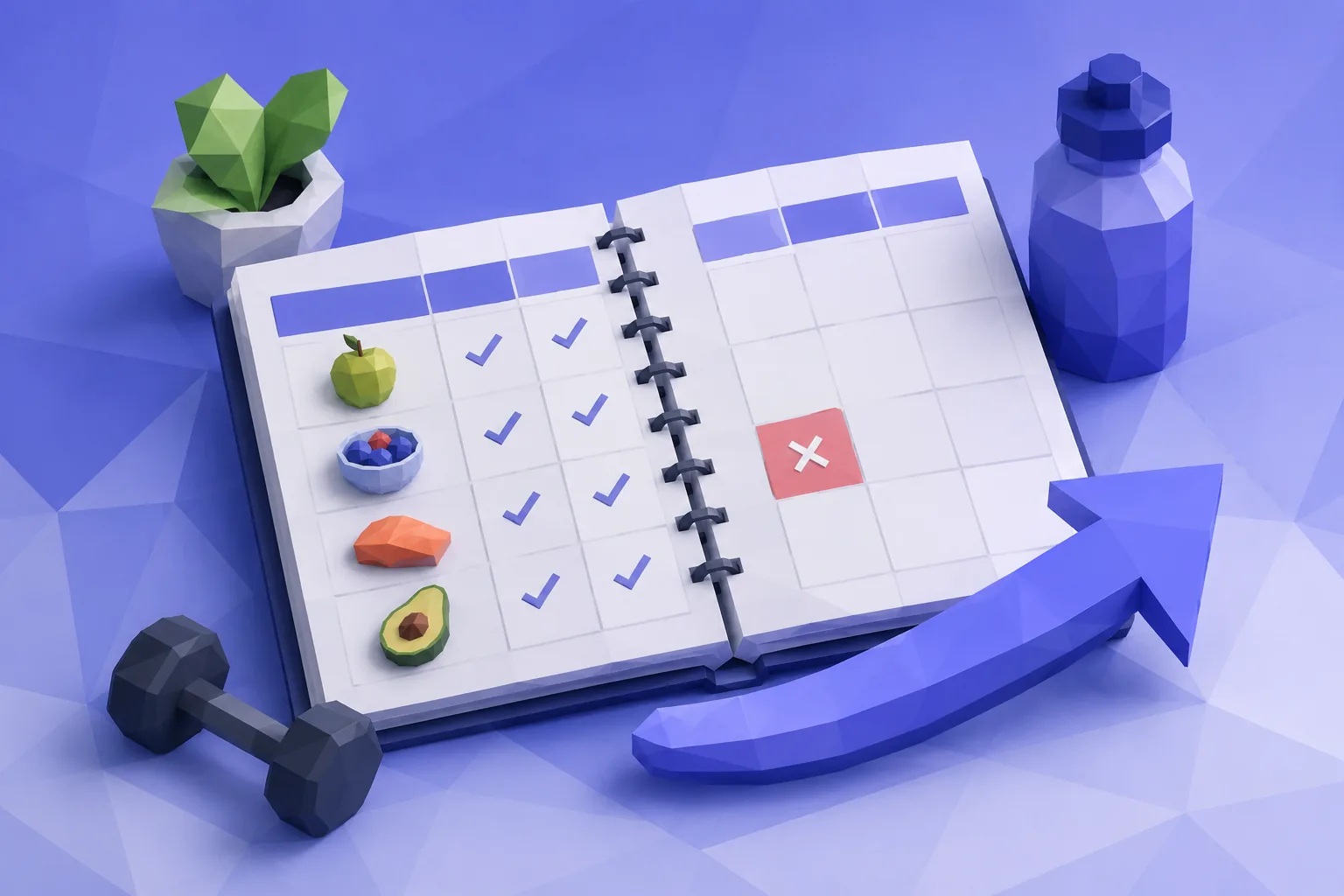
You track carefully Monday to Friday, the numbers look great, and then the scale refuses to reward you. If that sounds familiar, the weekend is the usual suspect. It is the two days when structure disappears — no work routine, more social meals, a drink or two — and it is remarkably easy for them to undo everything the weekdays built.
The weekend really does move the needle
This is not just a feeling. Studying adults over a year, researchers found people consistently gained weight on weekend days and lost it again during the week, driven by higher intake on Saturdays and less activity on Sundays. Over a week the effect can wash out; but if you are trying to lose, weekends are where the deficit you earned Monday to Friday quietly leaks away.
Where the calories hide
The weekend surplus is not usually a mystery binge — it is a handful of ordinary things stacking up:
- Alcohol, which brings its own calories and tends to loosen decisions about food.
- Eating out, where portions and hidden fats run far larger than home cooking.
- Grazing without structure — brunch that drifts into snacks that drift into a big dinner.
- A day of movement lost, as the steps you rack up commuting and working simply do not happen.
The bigger problem: logging stops too
Here is the quiet trap. Weekends are exactly when people stop tracking — and that matters more than any single meal, because how consistently you log predicts results better than how perfect each entry is. When the diary goes dark on Saturday, two things happen: you lose the awareness that keeps intake in check, and the day's calories vanish from your record. Since people already underestimate intake by around a fifth even when trying, an unlogged weekend is almost guaranteed to run higher than memory says.
How to enjoy weekends without derailing
The goal is not to make weekends miserable — it is to keep them honest. A few habits do most of the work:
- Keep logging, especially when it is messy. A rough estimate of a restaurant meal beats no entry at all.
- Log drinks first. Alcohol is the most commonly forgotten weekend calorie, so record it before the meal, not after.
- Bank a little room. Eating slightly under target on quieter days leaves slack for a social Saturday, guilt-free.
- Judge the week, not the day. A trend line smooths the Saturday bump into the bigger picture, so one indulgent day never reads as failure.
The psychology of the weekend
Weekends are not just a change of schedule; they are a change of mindset. The workweek's structure — set meals, a routine, a reason to stay sharp — falls away, and with it the guardrails. Add the "I've earned it" story after five disciplined days, the social pressure of meals out and rounds of drinks, and the sense that rules are suspended until Monday, and overeating stops looking like a lapse and starts feeling like the plan. Naming this is half the battle: the weekend is not a willpower failure, it is a predictable environment that quietly rewrites the rules.
Plan the week around the weekend
The trick is to treat Saturday and Sunday as part of the week's budget, not an exception to it. A few strategies that keep them from derailing the whole week:
- Bank a little room. Eating slightly under target Monday to Thursday leaves guilt-free slack for a social Saturday.
- Anchor the day with protein. A solid protein-forward breakfast before a big night out blunts the damage more than arriving ravenous.
- Keep the weekend active. The steps you lose by not commuting can be replaced with a walk, a hike, or a workout — movement you actually enjoy.
- Decide before you arrive. Choosing roughly what you will have before the menu or the party removes the in-the-moment decision that usually goes sideways.
None of this requires a joyless weekend — just a weekend that stays on the record and inside a sensible range.
How Eat'n'Fit helps
Weekends are precisely when fast logging earns its keep, and Eat'n'Fit makes it a few seconds: point the camera at a restaurant plate, or say "two beers and a burger" and let it estimate. It counts the weekend against the same target as your weekdays and charts your weight as a trend rather than a jumpy daily number, so you can see how the whole week actually landed. Enjoy the weekend — just do not let it disappear from the record.
Sources
- Racette SB, et al. Influence of weekend lifestyle patterns on body weight. Obesity, 2008.
- Harvey J, et al. Log often, lose more: electronic dietary self-monitoring for weight loss. Obesity, 2019.
- Ptomey LT, et al. Validity of energy intake estimated by digital photography plus recall in overweight and obese young adults. Journal of the Academy of Nutrition and Dietetics, 2015.
- Zheng Y, et al. Self-weighing in weight management: a systematic literature review. Obesity, 2015.

Keep weekends on the record
Eat'n'Fit logs a restaurant plate from a photo or a drink from your voice in seconds, and smooths it into your weekly trend.


Everything on the Eat'n'Fit blog is published for general information and wellness only, and is not a substitute for medical or nutritional advice or treatment. Always talk to a doctor or a registered dietitian before making significant changes to your diet. If you have, or think you may be at risk of, an eating disorder, please do not rely on the app and seek professional help.