 Eat'n'Fit
TL;DR
- Three macros carry all your calories: protein and carbs at about 4 per gram, fat at about 9.
- Protein keeps you full and protects your muscle, especially while you are losing weight. It is the one worth setting a target for first.
- Carbs are your main fuel; the quality of the carb matters more than the amount. Fat is essential for hormones and for absorbing key vitamins, so it should not be cut to nothing.
- You do not need a perfect split. Hit a sensible protein target, then fill the rest with carbs and fat in whatever ratio you enjoy and can keep up.
Open any tracker and three numbers stare back at you: protein, carbs, and fat. These are your macronutrients — the three things in food that carry energy. Every calorie you eat comes from one of them, which is why they get so much attention. The good news is that you do not need a nutrition degree to use them. You need to know what each one does, roughly how much to aim for, and how to read the split without letting it run your life.
Where calories actually come from
A calorie is just a unit of energy, and only these three macros supply it. Gram for gram they are not equal: protein and carbohydrate deliver about 4 calories per gram, while fat is more than double that at about 9. That single fact explains a lot — why a spoonful of oil moves your total more than a spoonful of rice, and why the same-sized plate can land very differently depending on what is on it.
Protein: the one to anchor on
If you only manage one macro on purpose, make it protein. It does two jobs the others cannot match. First, it is the most satisfying macro to eat, so a protein-forward meal tends to keep hunger quiet for longer. Second, it protects the muscle you already have when you are eating less — which is exactly when the body is tempted to burn muscle alongside fat.
A common baseline is around 0.8 grams of protein per kilo of body weight a day just to cover the basics. If you are active or losing weight, many people aim higher — roughly 1.6 grams per kilo — to hold on to muscle and stay full. Spreading it across your meals, rather than piling it into dinner, tends to work best.
Carbs: your main fuel
Carbohydrates are the body's preferred energy source, the fuel your brain and working muscles reach for first. They are not something to fear, and cutting them to the floor is rarely necessary. What matters most is the kind of carb. Higher-fibre, less-processed choices — whole grains, beans, fruit, and vegetables — are tied to lower rates of heart disease and type 2 diabetes. They also digest more slowly, so they keep energy and appetite steadier than refined carbs do.
So the useful question is not "are carbs good or bad?" but "is this carb bringing fibre along with it?" Most of the time, that is the whole game.
Fat: essential, not the enemy
Fat carries the most calories per gram, which earned it a bad reputation, but your body genuinely needs it. It builds the raw material for hormones, and it is what lets you absorb the fat-soluble vitamins A, D, E, and K. Push fat too low for too long and you can feel the difference in energy and mood. Lean toward unsaturated sources — olive oil, nuts, avocado, oily fish — keep an eye on portions because the calories add up fast, and let it sit as a normal part of the plate.
Reading your daily split
Put it together and you get your split: how your day's calories divide across the three. Broad, sensible ranges look roughly like this — protein somewhere around 10 to 35 percent of calories, fat around 20 to 35 percent, and carbs making up the rest. That is a wide window on purpose, because there is no single ratio everyone has to hit.
The practical order is simpler than the percentages suggest:
- Set a protein target first and treat it as the number you most want to reach each day.
- Fill the remaining calories with carbs and fat in whatever balance suits your tastes, your training, and what keeps you satisfied.
- Judge it over a week, not a meal. One fatty dinner or one high-carb day does not undo anything; the weekly pattern is what counts.
Chasing a flawless ratio at every meal is the fastest way to burn out on tracking. Aim in the right direction and let the averages do the work.
Where to get each macro
Targets are far easier to hit once you know the reliable sources for each macro. Keep a mental shortlist:
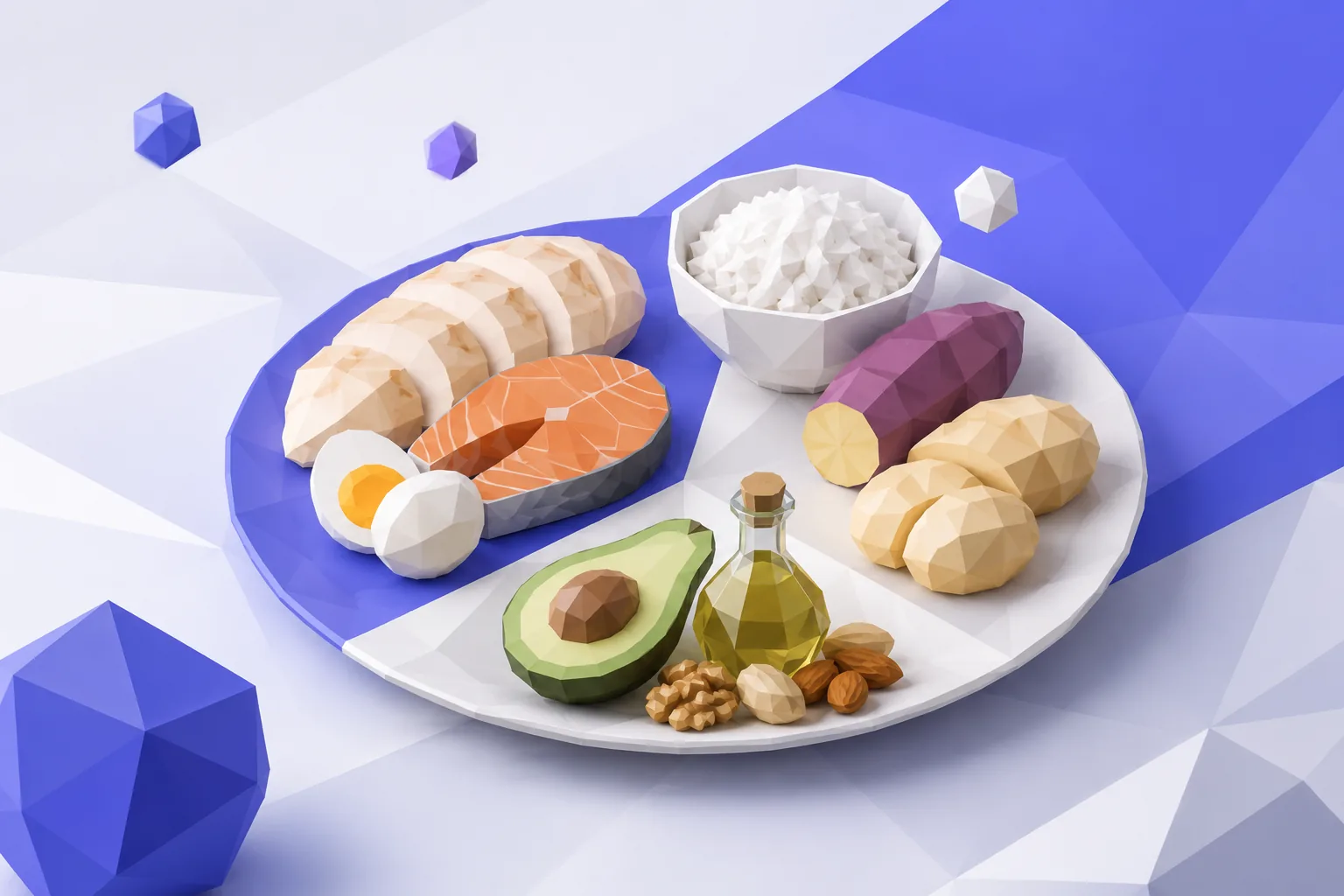
- Protein: chicken, turkey, lean beef, fish, eggs, Greek yogurt, cottage cheese, tofu, tempeh, edamame, lentils, and beans.
- Carbs (lean on higher-fibre ones): oats, brown rice, potatoes and sweet potatoes, whole-grain bread and pasta, fruit, beans, and vegetables.
- Fat (mostly unsaturated): olive oil, nuts and nut butters, seeds, avocado, and oily fish like salmon and mackerel.
Most whole foods carry more than one macro — salmon is protein and fat; beans are carbs and protein — which is exactly why you do not have to build separate meals for each. Anchor a plate with a protein, add a fibre-rich carb, and let some healthy fat round it out, and the split tends to look after itself.
A day, put together
A worked example makes the maths concrete. Say your target is 2,000 calories and your protein goal is 130 grams. Protein at 4 calories per gram accounts for about 520 calories, which leaves roughly 1,480 calories to split between carbs and fat however suits you. Lean toward carbs if you train hard and want fuel; lean toward fat if that keeps you fuller and more satisfied. Both are valid, and neither is "cleaner" than the other.
Across a normal day that might look like eggs and oats at breakfast, chicken with rice and vegetables at lunch, a yogurt-and-fruit snack, and salmon with potatoes and salad at dinner. No meal hits a perfect ratio on its own — and it does not need to. What matters is where the day lands, not any single plate.
The mistakes worth avoiding
- Chasing a perfect ratio at every meal. Judge macros over the day, not plate by plate — the fastest route to burnout is trying to balance each one.
- Under-counting fat. It is the most calorie-dense macro, so the oil, butter, and dressing you do not log are the ones that quietly blow the total.
- Treating all carbs the same. A doughnut and a bowl of lentils both count as carbs, but the fibre gap changes how full and steady you feel.
- Fixating on macros while ignoring calories. Macros shape the quality of your intake, but total calories still decide whether you lose, hold, or gain.
How Eat'n'Fit shows your split
You do not have to add any of this up by hand. Eat'n'Fit sets your calorie target from your own stats and turns it into a protein, carb, and fat goal for the day. When you scan a meal, it reads the food and breaks it into those same three numbers, then counts them toward your daily split — and the meal stays editable before you log it, so you can nudge a portion or add the oil you cooked in. By the evening you can see at a glance whether you hit your protein and where the rest of the day landed, without doing a single calculation yourself.
Sources
- Phillips SM. A brief review of higher dietary protein diets in weight loss: a focus on athletes. Sports Medicine, 2014.
- McRae MP. Health benefits of dietary whole grains: an umbrella review of meta-analyses. Journal of Chiropractic Medicine, 2016.
- Andrès E, et al. Fat-soluble vitamins A, D, E, and K: review of the literature and points of interest for the clinician. Journal of Clinical Medicine, 2024.

See your macros, not just calories
Scan a meal and Eat'n'Fit breaks it into protein, carbs, and fat against a daily split it sets from your own stats — no math on your end.


Everything on the Eat'n'Fit blog is published for general information and wellness only, and is not a substitute for medical or nutritional advice or treatment. Always talk to a doctor or a registered dietitian before making significant changes to your diet. If you have, or think you may be at risk of, an eating disorder, please do not rely on the app and seek professional help.