 Eat'n'Fit
TL;DR
- It is a pattern, not a macro formula — lots of vegetables, olive oil, fish, legumes, and whole grains; little red and processed meat.
- The evidence is among the strongest of any diet, especially for heart health.
- It is not built around calorie restriction, so if weight loss is your goal, you still track calories on top of the pattern.
- Watch olive oil and nuts — wonderful foods, but calorie-dense enough to notice.
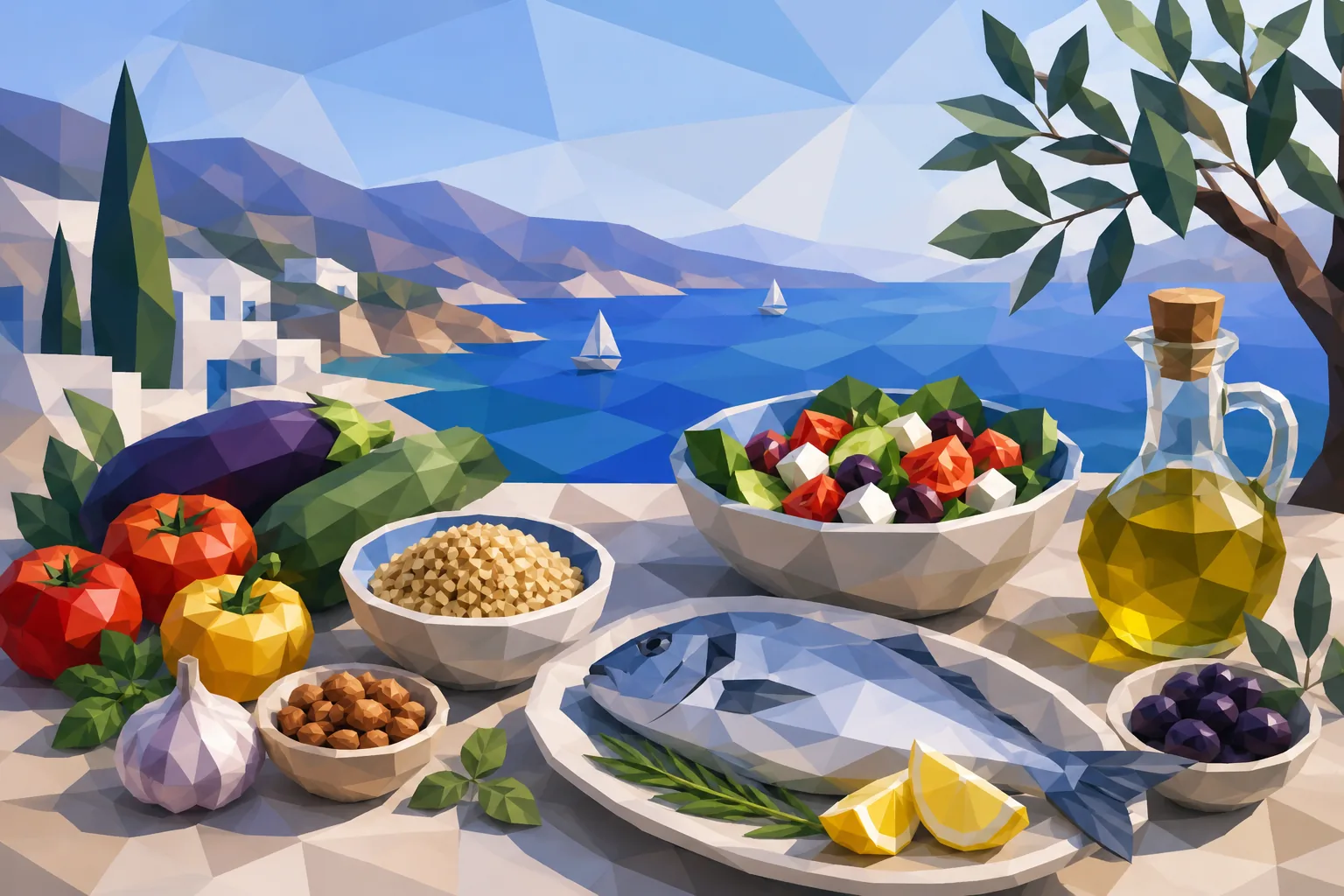
Most diets tell you a number: a carb limit, a fasting window, a macro split. The Mediterranean diet tells you a way of eating instead. It is less a set of rules than a pattern built around vegetables, fruit, legumes, whole grains, nuts, olive oil, and fish, with red and processed meat kept to the edges. For trackers used to hard targets, that looseness is the thing to get comfortable with.
Why it is worth your attention
Few eating patterns are as well studied. In a large trial, people at high cardiovascular risk who followed a Mediterranean diet rich in olive oil or nuts had fewer major heart events than those on a lower-fat control diet — and notably, that benefit came without calorie restriction. More broadly, diets that score highly for quality, as this one does, track with lower rates of disease and early death.
What the pattern looks like on a plate
- Base every meal on plants — vegetables, fruit, beans, lentils, and whole grains, which carry fibre and lower disease risk.
- Make olive oil your main fat, and eat nuts and seeds regularly.
- Choose fish and seafood often, poultry and eggs sometimes, and red meat rarely.
- Keep sweets and heavily processed food occasional, not everyday.
How to track it
Because the Mediterranean diet is a pattern rather than a calorie plan, tracking it works on two levels. First, use your log to check the shape of your days — are plants, olive oil, and fish actually showing up, and is red meat staying rare? Second, if your goal is weight loss, remember the pattern alone will not create a deficit, so keep an eye on calories too. The one number worth watching closely is fat from olive oil and nuts: they are core to the diet and genuinely good for you, but calorie-dense enough that a heavy hand can quietly stall weight loss.
A day on the Mediterranean diet
The pattern is easier to picture as meals than as rules:
- Breakfast: Greek yogurt with berries, nuts, and a drizzle of honey, or whole-grain toast with avocado and egg.
- Lunch: a big salad of leaves, chickpeas, tomatoes, olives, and feta, dressed with olive oil.
- Snack: fruit, a handful of nuts, or hummus with vegetables.
- Dinner: grilled fish with roasted vegetables and a small portion of whole grains or potatoes.
Vegetables, olive oil, and something from the sea show up again and again; red meat and sweets stay at the edges rather than the centre.
Common misconceptions
- It is not "pasta and bread." The base is vegetables, legumes, fish, and olive oil — refined grains are a small part, not the star.
- Olive oil is encouraged, not unlimited. It is a wonderfully healthy fat and also calorie-dense, so it still counts toward your day.
- Wine is optional. Moderate wine is part of the traditional pattern, but it is not required and there is no health reason to start.
- It is a pattern, not a 30-day plan. The benefits come from eating this way as a long-term default.
Using it for weight loss
The Mediterranean diet is built for health rather than calorie restriction — in the trials showing its heart benefits, people ate freely without counting. That makes it excellent for wellbeing, but it means the pattern alone will not create a deficit. To lose weight, keep the Mediterranean shape and add a modest calorie target on top, watching portions of the calorie-dense stars — olive oil, nuts, and cheese — which are healthy but easy to overpour. You get the well-evidenced pattern and the deficit that actually moves the scale.
How Eat'n'Fit helps
Eat'n'Fit lets you live the pattern while keeping the numbers honest. Scan or say what you ate and it logs the calories and macros, so you can enjoy an unrestricted Mediterranean style and still see where you stand — whether you are eating for health, for weight, or both. The nutrition score gives you a quick read on how closely a day matched the whole-food pattern this diet is built on.
Sources
- Estruch R, et al. Primary prevention of cardiovascular disease with a Mediterranean diet supplemented with extra-virgin olive oil or nuts. New England Journal of Medicine, 2018.
- Schwingshackl L, Hoffmann G. Diet quality as assessed by the Healthy Eating Index, the Alternate Healthy Eating Index, the DASH score, and health outcomes: a systematic review and meta-analysis of cohort studies. Journal of the Academy of Nutrition and Dietetics, 2015.
- McRae MP. Health benefits of dietary whole grains: an umbrella review of meta-analyses. Journal of Chiropractic Medicine, 2016.

Live the pattern, keep the numbers honest
Eat'n'Fit logs your Mediterranean meals into calories and macros and scores each day, so you eat freely and still see where you stand.


Everything on the Eat'n'Fit blog is published for general information and wellness only, and is not a substitute for medical or nutritional advice or treatment. Always talk to a doctor or a registered dietitian before making significant changes to your diet. If you have, or think you may be at risk of, an eating disorder, please do not rely on the app and seek professional help.