 Eat'n'Fit
TL;DR
- Fasting sets when you eat; macros set what. The window does not change how many calories your body needs.
- Weight loss still comes from a calorie deficit — fasting mostly helps by making that deficit easier to hold.
- Set your calorie target first, then hit a solid protein goal within your eating window.
- Do not treat the window as a free-for-all. A short window with unlimited food undoes the whole point.
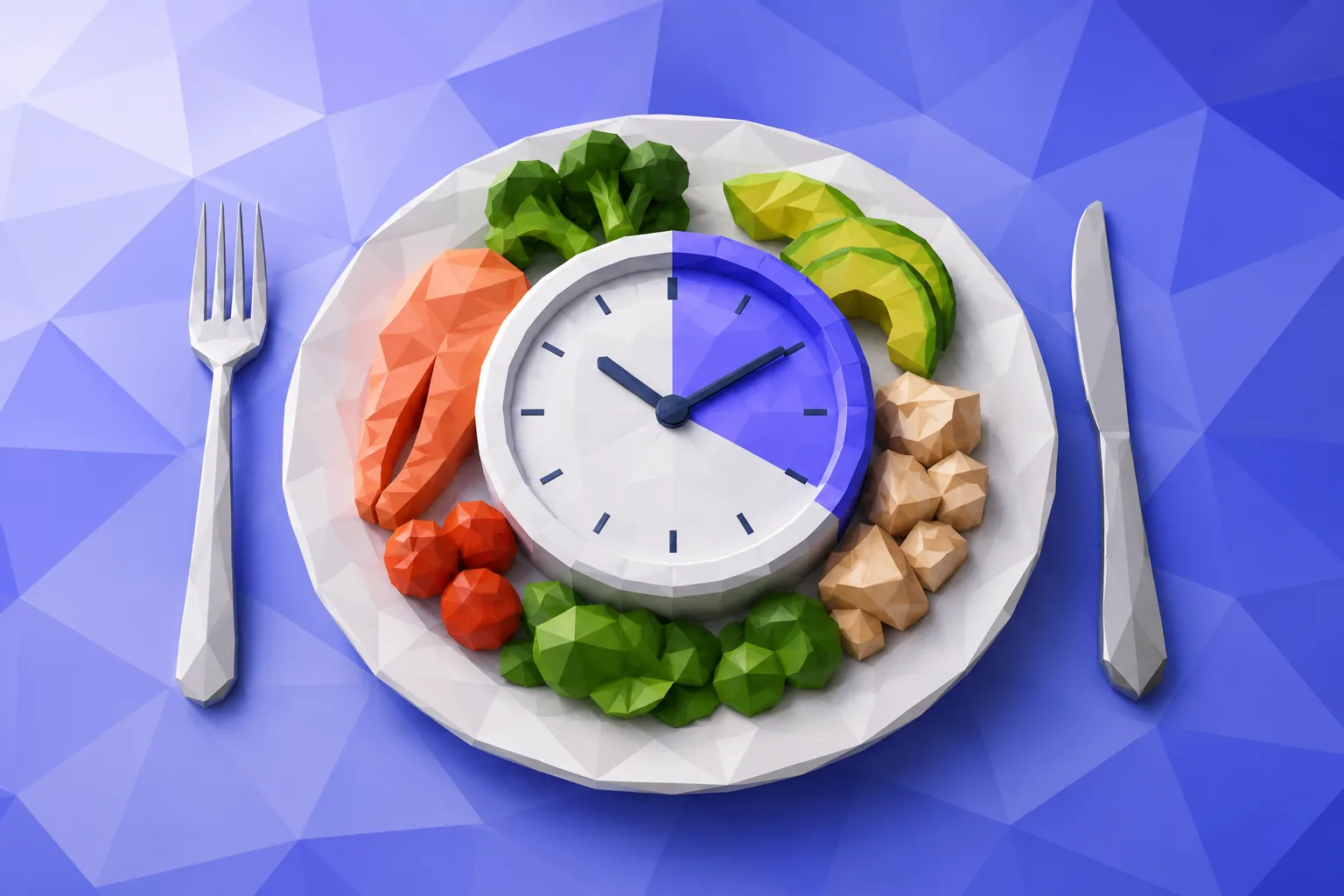
Intermittent fasting gets talked about as if the clock itself melts fat. It is more ordinary than that, and more useful: fasting is a schedule, not a macro plan. Whether you run 16:8, eat two meals, or fast a couple of days a week, your body still needs the same calories and nutrients — you are just fitting them into a smaller window.
The window is a tool, not the magic
When researchers compare fasting head-to-head with simply cutting calories the usual way, the weight loss comes out broadly similar. The value of fasting is practical: for many people, a shorter eating window naturally trims snacking and makes a calorie deficit easier to keep. That is a real benefit — but it means the fasting works through your calories, not instead of them.
Set calories first
Because weight change follows the balance of energy in and out, your calorie target is still the number that decides whether you lose, hold, or gain. Set it exactly as you would without fasting — from your own stats and goal — and let the eating window be the schedule you pour those calories into, not a reason to ignore them.
Protect protein in the window
A shorter window makes it easy to fall short on protein, which is the macro you least want to skimp on. Aim for a solid daily total — around 1.6 grams per kilogram of body weight covers most people — and split it across the meals you do eat. With only two or three meals to work with, that usually means making protein the anchor of each one.
Do not undo it in the window
The classic mistake is treating the eating window as permission to eat without limit. A tight window with unlimited food is just a normal diet with worse timing, and the deficit vanishes. Fasting only helps if what lands in the window still respects your calorie and protein targets.
The popular schedules
"Intermittent fasting" covers several patterns; pick the one that fits your life, because the best schedule is the one you will actually keep:
- 16:8 (time-restricted eating). Eat within an 8-hour window, fast 16. The most popular and easiest to sustain — usually just skipping breakfast or an early dinner.
- 5:2. Eat normally five days, keep two non-consecutive days very low (around 500-600 calories).
- Alternate-day fasting. Alternating normal and very-low days — effective but harder to live with long term.
- OMAD (one meal a day). A single large meal; simple, but genuinely difficult to hit protein and nutrient needs in one sitting.
Whichever you choose, the macros underneath do not change — a shorter window just concentrates the same targets into less time.
Practicalities of the fasting window
During the fast, water, black coffee, and plain tea are fine and do not meaningfully break it; it is calories that end a fast, so a splash of milk or a sweetened drink counts as eating. Training fasted is fine for many people for lighter or steady sessions, though hard strength work often goes better with some fuel beforehand — experiment and see how you feel. The golden rule remains: whatever you do in the window still has to respect your calorie and protein targets.
Who should be cautious
Fasting is not right for everyone. Anyone who is pregnant or breastfeeding, has a history of disordered eating, or takes medication that must be paired with food — particularly people with diabetes on glucose-lowering drugs — should talk to a doctor before trying it. For those groups the timing can matter medically, and this is a change worth making with professional guidance rather than on your own.
How Eat'n'Fit helps
Eat'n'Fit sets your calorie and protein targets independently of when you eat, so fasting becomes a schedule laid over solid numbers. Log the meals in your window with a scan or your voice, watch your protein reach target before the window closes, and let the app confirm the deficit is real — the fasting will take care of the rest.
Sources
- Alfahl SO, et al. Evaluation of the effectiveness of intermittent fasting versus caloric restriction in weight loss and improving cardiometabolic health: a systematic review and meta-analysis. Journal of Taibah University Medical Sciences, 2025.
- Hall KD, et al. Quantification of the effect of energy imbalance on bodyweight. The Lancet, 2011.
- Morton RW, et al. A systematic review, meta-analysis and meta-regression of the effect of protein supplementation on resistance training-induced gains in muscle mass and strength. British Journal of Sports Medicine, 2018.

Fill your window with the right numbers
Eat'n'Fit sets your calorie and protein targets whatever your schedule, so fasting sits on top of solid macros.


Everything on the Eat'n'Fit blog is published for general information and wellness only, and is not a substitute for medical or nutritional advice or treatment. Always talk to a doctor or a registered dietitian before making significant changes to your diet. If you have, or think you may be at risk of, an eating disorder, please do not rely on the app and seek professional help.